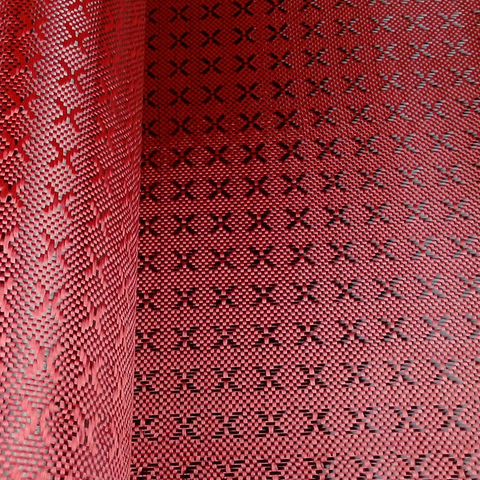
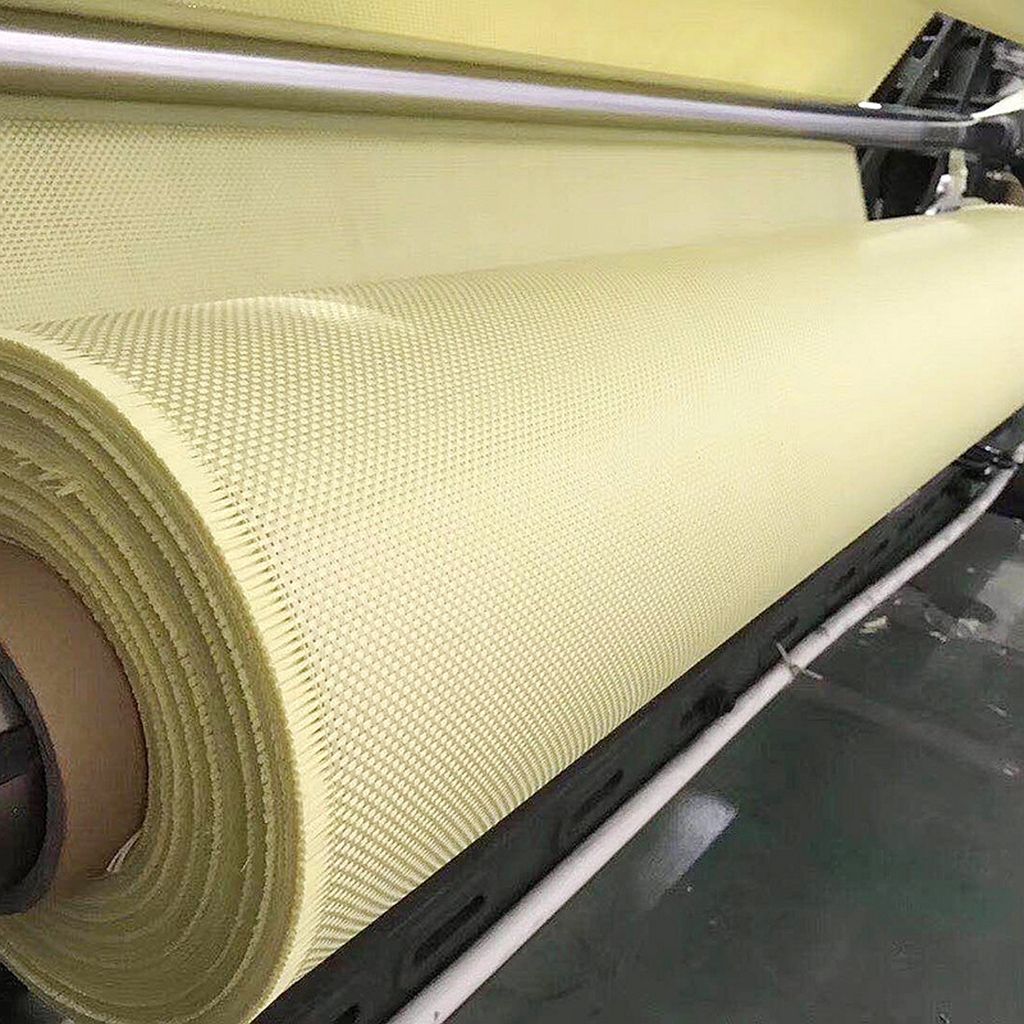
Core classification: Accurate division based on performance orientation and application scenarios
Aramid fiber preprep has a rich category system, which can be divided into four mainstream categories based on resin type, fiber type, functional characteristics, and layout. Each product focuses on differentiated application scenarios, achieving precise adaptation to the needs of different industries.
1. Functional boundary division by resin type: thermosetting and thermoplastic
The resin system is the core element that determines the molding characteristics and application scope of Aramid fiber prepreg, which can be divided into two basic categories. The two have distinct differences in curing mechanism and performance focus:
-
Thermosetting Aramid Fiber Prepreg: Based on epoxy resin, phenolic resin, cyanate ester resin, etc., it requires irreversible cross-linking and curing through heating and pressure. It is currently the mainstream category in the market, accounting for over 85% by 2024. Among them, epoxy resin based products are widely used in aerospace structural components, high-end protective equipment and other scenarios due to their excellent adhesion and balanced mechanical properties (tensile strength can reach 280MPa or more); Phenolic resin based products focus on excellent flame retardancy and temperature resistance, with low smoke density during combustion, making them suitable for interior decoration of rail transit carriages and fire-resistant components of ships; Cyanate ester resin based products have low dielectric properties, with a dielectric constant of ≤ 2.8, and are suitable for high-frequency scenarios such as radar covers and 5G antennas. The core characteristics of this type of Aramid fiber preform are stable structure and excellent creep resistance after curing, but the molding cycle is relatively long (usually 40-90 minutes) and the difficulty of recycling is high.
-
Thermoplastic Aramid fiber prereg: Using melt able resins such as polyetheretherketone (PEEK), polyamide (PA), and polyphenylene sulfide (PPS), it has reversible properties of "heating softening cooling curing" and has grown rapidly in recent years, with a market share of 15% by 2024. Its outstanding advantages are high molding efficiency, which shortens the cycle time by more than 60% compared to thermosetting products. The single batch molding time can be controlled within 15-30 minutes, and it can be recycled and reused, meeting the large-scale production needs of new energy vehicle battery pack protection, high-end sports equipment, and so on. For example, the car battery pack cover plate made of PA based Aramid fiber preprereg has an impact strength of 120kJ/m ², which is 45% lighter than traditional metal cover plates. After collision, some damage can be repaired by heating.
2. By aramid fiber type: source differentiation of basic performance
The material properties of aramid fiber itself provide different performance substrates for Aramid fiber preprepreg, mainly divided into three categories, adapted to different strength and cost requirements:
-
Prepreg based on para aramid (PPTA): The most commonly used high-end category, with fiber tensile strength of over 3.6GPa, modulus of 120GPa, and impact resistance more than 5 times that of steel. It is mainly used in aerospace, defense and military industries with strict performance requirements. For example, DuPont's Kevlar ® Aramid fiber preprep made of 49 fibers is widely used for reinforcing aircraft fuselage ribs and bulletproof helmets, with a bulletproof rating of up to NIJ III.
-
Prepreg based on meta aramid (PMIA): With excellent corrosion resistance and flame retardancy as its core, it can be used for a long time at temperatures above 200 ℃. After soaking in a 50% sulfuric acid solution for 1000 hours, the mechanical performance degradation rate is less than 8%, making it suitable for chemical pipeline protection, high-temperature filtration materials, and other scenarios. Teijinconex, like Emperor's aramid ® Prepreg made of fibers is used as an anti-corrosion lining for chemical storage tanks.
-
Co aramid based prepreprereg: It combines the advantages of para aramid and meta aramid, with a cost reduction of more than 30% compared to pure para aramid, and a tensile strength of 2.8 GPa. It is suitable for high-end sports equipment, automotive interiors, and other cost sensitive mid to high end scenarios such as badminton rackets and racing seat backrests.
3. Fiber Layout: Unidirectional and Braided Mechanical Performance Differentiation Design
The arrangement of aramid fibers directly determines the directional mechanical properties of Aramid fiber prepreg, forming two core categories for different stress scenarios:
-
Unidirectional Aramid fiber preform: Aramid fibers are arranged in parallel along a single direction, with a directional consistency of over 99.6%, resulting in the ultimate mechanical properties of the material in the fiber axis. The tensile modulus can reach over 110GPa, while the transverse properties are relatively weak. This type of product is mainly used for structural components that can withstand unidirectional loads, such as aircraft wing impact layers, wind turbine blade edge protection, bridge reinforcement bands, etc. Through multi-directional stacking design, complex stress requirements can be achieved. Its surface density covers 50g/㎡ to 400g/㎡, and can be accurately selected according to the load size. For example, the edge of a 10MW wind turbine blade is made of 200g/㎡ unidirectional Aramid fiber prereg, which can improve the blade's lightning impact resistance by 60%.
-
Weaving Aramid fiber prereg: Aramid fibers are interwoven and formed in plain weave, twill weave, satin weave and other ways, with multi-directional balanced distribution of mechanical properties and better drapability and cutting resistance. Flat weave products have a dense structure and strong wear resistance, making them suitable for protective equipment such as bulletproof vests and stab resistant gloves; The twill weave products have excellent flexibility and can fit complex curved surfaces. They are used for the anti impact layer of ship hulls and the anti-collision beam of car doors; Satin woven products are characterized by high tear strength, with a tear strength of up to 80kN/m, suitable for aerospace interior parts and high-end tent fabrics. Products with different weaving methods can be paired with different line density specifications ranging from 100D to 1000D, forming a diversified selection from delicate textures to rough structures.
4. Customized derivative categories for special scenarios based on functional characteristics
In response to extreme environments or special needs, Aramid fiber preprep has developed multiple functional sub categories, becoming a key factor in expanding application boundaries:
-
High temperature resistant Aramid fiber prereg: Using modified polyimide resin, the long-term use temperature can reach 250-350 ℃, and the tensile strength retention rate at high temperatures exceeds 85%. For example, DuPont's Kevlar ® Prepreg made of 149 fibers combined with polyimide resin is used for insulation components around aircraft engines and lining rocket launch tubes.
-
Flame retardant Aramid fiber prereg: relying on the natural flame retardancy of meta aramid, combined with halogen-free flame retardant resin, the flame retardant performance can reach UL94 V0 level, and there is no toxic gas release during combustion. The smoke density rating (SDR) is less than 15, suitable for scenarios with extremely high fire prevention requirements such as subway car interiors and aircraft cabin partitions.
-
Antistatic Aramid fiber prereg: Adding conductive fillers (such as carbon nanotubes) to the resin to control the surface resistance between 10 ⁶ -10 ⁸ Ω while retaining impact resistance, suitable for underground protective equipment in coal mines, anti-static enclosures for electronic devices, and other scenarios.
-
Weather resistance Aramid fiber prepreg: The anti ultraviolet and anti-aging components are added to the resin, and the mechanical property attenuation rate is less than 10% after five years of outdoor exposure. It is suitable for outdoor billboards, high-voltage cable protective sleeves, offshore wind power equipment and other scenarios.
Core advantage: Six core characteristics that reshape the application value of materials
Aramid fiber preform stands out among numerous composite materials and becomes a "must-have material" for high-end protection and precision manufacturing due to its comprehensive advantages in impact resistance, lightweight, stability, and other dimensions. These characteristics together build its irreplaceable market position.
1. Ultimate impact and cutting resistance performance
Impact resistance is the core advantage of Aramid fiber prepreg, and the high toughness of aramid fibers and the bonding effect of resin form a synergistic effect, making the material have excellent energy absorption capacity. The impact toughness of ordinary para aramid based prepreg can reach over 150kJ/m ², which is three times that of carbon fiber prepreg and eight times that of steel. In the field of bulletproof, the bulletproof board made of 100g/㎡ unidirectional Aramid fiber prepreg laminate can withstand the impact of 9mm handgun bullets and weighs only 1/5 of steel plates with the same protection level; In the aerospace field, the use of Aramid fiber preprereg impact resistant layer on the aircraft fuselage reduces the structural damage area by 70% when encountering bird strikes; In the field of new energy, the use of this material for battery protection can significantly reduce the risk of thermal runaway through safety tests such as needle punching and squeezing. In addition, its cutting resistance is also extremely outstanding, with the cutting resistance level of 200g/㎡ woven Aramid fiber prereg reaching EN 388 Level 5, far exceeding that of ordinary fiber materials.
2. Excellent lightweight and mechanical balance
Aramid fiber preprep perfectly combines the performance advantages of aramid fiber and resin, achieving the ultimate balance of "high strength+lightweight". Its density is only 1.4-1.6g/cm ³, less than 1/5 of steel and 1/2 of aluminum alloy, while its tensile strength can reach 280-350MPa, comparable to ordinary steel. In the aerospace industry, aircraft interior parts and structural reinforcements manufactured using Aramid fiber preprereg can reduce weight by over 300kg per aircraft, directly reducing fuel consumption by 8% -10%; In the automotive field, the use of this material in racing car bodies reduces weight by 55% compared to aluminum alloy bodies, while increasing impact resistance by 40%; In the field of sports equipment, golf clubs using 1K aramid based preprepreg can reduce weight by 25%, increase swing speed by 10%, and increase hitting distance by 15 yards. In addition, its mechanical properties have excellent balance, with a bending modulus of up to 80-110GPa. It is not easily deformed after long-term use and is suitable for various load-bearing structural scenarios.
3. Environmental adaptability and durability in all scenarios
Aramid fiber preprep has environmental resistance far beyond traditional materials, making it a reliable choice for complex working conditions. In terms of corrosion resistance, meta aramid preprepreg can have a service life of over 15 years in strong acid, strong alkali, salt spray and other environments. In the field of marine vessels, the hull protection layer made of it can resist seawater erosion and extend the maintenance cycle by three times compared to galvanized steel plates; In terms of weather resistance, products with added UV resistant ingredients have a color retention rate of over 90% after 5 years of outdoor exposure, without cracking or powdering; In terms of temperature resistance, high-temperature products can be used for short-term use at 350 ℃ and long-term use at 250 ℃, and perform stably in high-temperature scenarios such as industrial kilns and aircraft engines; In terms of fatigue resistance, under dynamic load cycles, the fatigue strength retention rate reaches over 90%, which is 12 percentage points higher than the industry average. After using this material, the service life of wind turbine blades can be extended to over 25 years.
4. Highly flexible customization capability
Aramid fiber preprep can achieve full dimensional parameter customization, accurately matching personalized needs of different industries. The resin system can be adjusted according to the scenario, such as high-temperature resistant polyimide resin for aviation and fast curing epoxy resin for automobiles; The precision of resin content control reaches ± 0.5%, ensuring the consistency of product performance; Fiber types can be selected as needed, with flexible combinations of para -, meta -, or co aramid fibers; The width supports customization from 0.3m to 2.0m, and large ship hulls can use 2.0m wide products, reducing the number of joint seams by more than 60%; Functional features can be combined and stacked, such as "flame retardant+anti-static", "high temperature resistance+corrosion resistance" and other composite functions. For example, Aramid fiber prereg, a composite function used in coal mine underground protective equipment, not only meets UL94 V0 level flame retardant requirements, but also has anti-static performance, while ensuring impact resistance.
5. Excellent process adaptation and molding efficiency
Aramid fiber prereg is compatible with mainstream composite material forming processes such as hot press cans, compression molding, vacuum bags, and winding, and is suitable for various needs from single piece customization to mass production. The compression molding process is suitable for standardized components such as battery pack cover plates and bulletproof plug plates. The single-mode production time can be controlled within 15-30 minutes, and the dimensional accuracy error is ≤± 0.2mm. The hot press can molding is suitable for high-end aerospace components, and the internal defect rate of the product is less than 0.3% through pressure control of 0.8-1.2MPa and temperature control of 120-200 ℃; The winding molding is suitable for cylindrical components such as pipelines and pressure vessels. The oriented arrangement of aramid fibers allows the axial and circumferential strength ratio of the product to reach 4:1, meeting the requirements of high-pressure transportation. In addition, its semi cured state is easy to cut and lay, with a waste rate of only 3% -5%, far lower than the 15% -20% of traditional wet forming, greatly reducing material waste.
6. Cost benefit advantages throughout the entire lifecycle
Although the initial procurement cost of Aramid fiber prereg is higher than that of traditional materials, its full lifecycle cost advantage is significant. In the field of national defense and military industry, its lightweight characteristics can reduce equipment transportation costs by 40% and improve equipment mobility; In the field of new energy, the use of this material for battery protection has increased the pass rate of safety tests by 80%, avoiding huge losses caused by safety accidents; In the field of industrial equipment, its corrosion resistance can extend the equipment maintenance cycle from 1 year to 5 years, reducing maintenance costs by 70%; In the aerospace industry, reducing the weight of a single aircraft by 300kg can save approximately 1.2 million yuan in fuel costs annually. The recyclability of thermoplastic products further reduces raw material costs, with a performance retention rate of over 75% for recycled materials, which can be used to manufacture secondary structural components.
Process selling point: precise control and value enhancement from raw materials to finished products
The excellence of Aramid fiber preprep lies in its precise production process and full process quality control. Its process system not only ensures product consistency, but also achieves an optimized balance between performance and cost, becoming the core support for category competitiveness.
1. Core production process: Dual guarantee of hot melt method and solution immersion method
The industry mainstream adopts two core impregnation processes, which can be flexibly selected according to product positioning and quality requirements to ensure the performance stability of Aramid fiber prepreg:
-
Hot melt process: Heat the resin to 90-130 ℃ to reduce viscosity, evenly coat the resin on the surface of aramid fibers through precision hot pressing rollers, and then rapidly cool it to room temperature through cooling rollers to complete semi curing and shaping. The core advantage of this process is the absence of solvent residue, precise control of resin content up to ± 0.5%, and high consistency of fiber arrangement, making it particularly suitable for the production of high-end Aramid fiber prepreg for aerospace applications. Kevlar from DuPont ® The series prepregs all adopt this process, which controls the pressure (0.6-1.0MPa) and speed (4-8m/min) of the hot press roller through computer control, ensuring that the resin distribution error per square meter of product is less than 0.3%.
-
Solution impregnation process: The resin is dissolved in organic solvents such as acetone and xylene to form a low viscosity solution. After the aramid fibers are fully adsorbed by the resin in the impregnation tank, the solvent is evaporated through a multi-stage hot air drying channel (temperature gradient 60-130 ℃), and finally a semi cured state is formed. This process equipment has low investment cost and high production efficiency (with a line speed of 12-18 m/min), making it suitable for large-scale production of universal Aramid fiber preforms. To solve the problem of solvent residue, the industry has widely adopted vacuum assisted removal and nitrogen protected drying technology, which reduces the residual solvent content to less than 0.08% and avoids bubbles and delamination defects after product solidification.
2. Key process control points: the five core processes that determine performance
The quality stability of Aramid fiber prereg comes from the refined control of the entire production process, where five key links directly determine the final performance of the product:
-
Surface treatment of aramid fiber: The surface of aramid fiber is smooth and has weak adhesion with resin. It needs to be treated by plasma oxidation or coating with coupling agent to increase the active groups on the fiber surface. After treatment, the interfacial bonding strength between fibers and resin increased by more than 45%, effectively solving the problems of delamination and debonding that are prone to occur in traditional products. After this treatment, the impact resistance of para aramid based preprepreprepregel can be improved by 30%.
-
Resin formula precise modulation: According to the functional requirements of the product, the resin, curing agent, additives and other ingredients are accurately proportioned. For example, flame-retardant products require the addition of 18% -25% phosphorus nitrogen flame retardants, along with 0.8% anti drip agents; For high-temperature resistant products, the ratio of polyimide resin to curing agent needs to be adjusted to ensure crosslinking density; Anti static products should be uniformly dispersed with 5% -8% carbon nanotubes to avoid uneven conductivity. The formula is formulated using a fully automatic mixing and ultrasonic dispersion system, with an error controlled within ± 0.1%.
-
Dynamic control of impregnation parameters: Real time adjustment of impregnation speed, temperature, and pressure based on the linear density of aramid fibers and resin viscosity. For example, the immersion speed of 100D filament bundle products is controlled at 6-8m/min, and the pressure is reduced to 0.5MPa to avoid fiber breakage; The 1000D coarse fiber bundle product can be increased to 15m/min and the pressure can be increased to 0.9MPa to ensure that the resin fully infiltrates the inside of the fibers.
-
B-stage curing precise control: By adjusting the drying temperature and time, the resin curing degree is controlled at a semi cured state of 35% -45%, ensuring that the product has a certain viscosity for easy layering and avoiding premature complete curing. Real time monitoring of curing degree using differential scanning calorimetry (DSC) and dynamic mechanical analysis (DMA) with an error of less than 2%.
-
Strict quality inspection of finished products: Each batch of products must pass multiple tests, including resin content (accuracy ± 0.1%), fiber surface density (± 1g/㎡), tensile strength, impact toughness, flame retardant performance, etc. The computer vision system is used to detect the uniformity of fiber arrangement and the integrity of patterns, with a defect detection rate of 99.9%, ensuring that unqualified products do not enter the market.
3. Trend of Process Innovation: Three Major Directions for Promoting Category Upgrading
The industry continues to improve the performance and cost-effectiveness of Aramid fiber prepreg through process innovation, with three major innovation directions leading the development of the category:
-
Upgrade of automated production line: Introduce industrial robots and AI vision inspection system to achieve full process automation from aramid fiber unwinding, impregnation, curing to winding and cutting, increasing production efficiency by more than 60% and reducing product consistency error to ± 0.2%. For example, the automated production line of a leading enterprise can achieve a daily output of 4000 square meters per line, which is four times higher than traditional manual production lines.
-
Breakthrough in Multi axial Layering Technology: Developed a multi axial Aramid fiber prereg production line that can simultaneously achieve multi-directional fiber synchronous impregnation and layering at 0 °, 90 °, ± 45 °, and other angles, reducing subsequent product layering processes and increasing production efficiency by 45%. It is particularly suitable for the manufacturing of large components such as wind turbine blades and ship hulls, while improving the overall mechanical properties of the products.
- Green process research and application: Promote solvent-free impregnation process and the application of bio based resins (such as castor based epoxy resin), reduce dependence on petroleum based raw materials, and reduce VOC emissions by more than 90%; Developing chemical depolymerization and recycling technology for thermosetting products to increase the recovery rate of aramid fibers to over 80%, in line with the trend of green manufacturing and circular economy.

 EN
EN