
 EN
EN
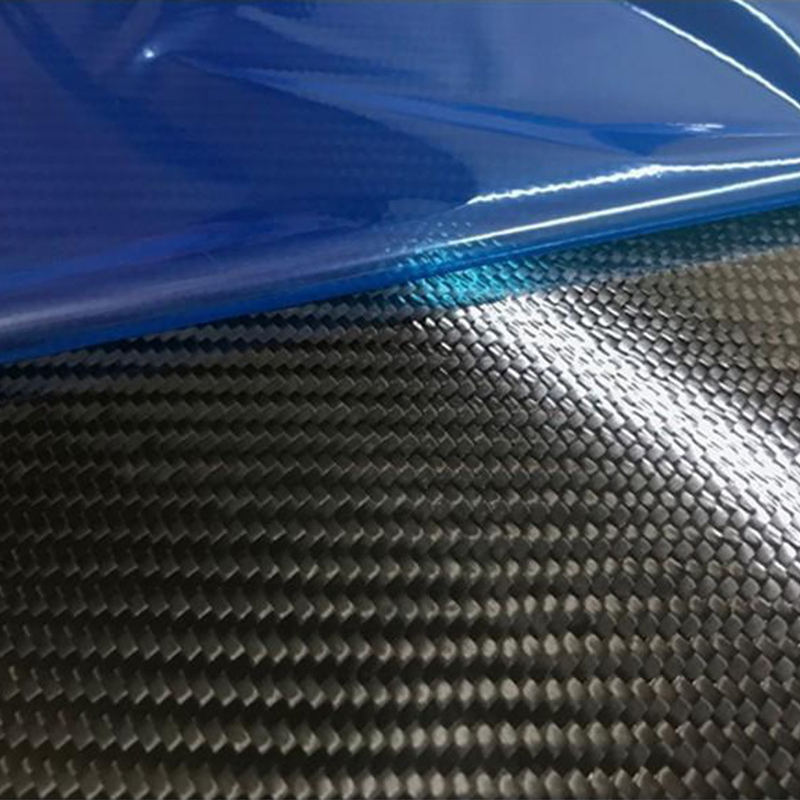
The Failure Mechanism – Why Standard Tools Degrade Rapidly on Bidirectional Carbon Fiber
Bidirectional carbon fiber presents unique machining challenges that quickly degrade conventional cutting tools. Its high elastic modulus and dual-fiber orientation create an extremely abrasive environment, as carbon fibers act like microscopic cutting particles, grinding away tool edges at an accelerated rate. Industry data shows a standard carbide end mill can lose its sharp edge within 5 to 10 minutes of cutting CFRP, yielding only 10 to 20 parts before replacement. This rapid wear makes continuous production economically unfeasible. The failure mechanism goes beyond simple wear. As the cutting edge rounds, it stops shearing fibers cleanly and instead tears and pulls bidirectional layers, triggering delamination, fiber pullout, and fuzzy surface finishes. Cross-plies are especially vulnerable: dull tools dragging across orthogonal fibers induce interlaminar separation. The problem escalates progressively, as a worn edge increases cutting forces, which further accelerates wear and worsens delamination. Standard metal-cutting tools are not engineered for carbon fiber's abrasiveness. Carbide's hardness, typically 1,500 to 2,000 HV, is insufficient to maintain the sharp, stable geometry needed for clean fiber severance. Without greater wear resistance, edge degradation begins almost immediately, compromising structural integrity and surface quality in ways no post-processing can fully correct.
CNC Routing – Spindle Speed, Feed Rate, and Tool Geometry Optimization
Achieving accurate cuts on bidirectional carbon fiber demands precise control over spindle speed, feed rate, and tool geometry. High spindle speeds, typically 15,000 to 30,000 RPM, reduce cutting forces and delamination risk, but must be balanced with feed rate to avoid resin burn or fiber tearing. A chip load of 0.05 to 0.15 millimeters per tooth optimizes material removal while minimizing heat buildup. Compression cutters, with opposing helix angles, apply simultaneous downward and upward pressure to suppress top-layer fuzz and cleanly shear bottom fibers. Diamond-coated, multi-flute end mills significantly extend tool life by resisting abrasion far better than standard carbide, critical when even minor edge rounding degrades cut quality. Consistent vacuum extraction removes conductive dust, protecting both machine electronics and workpiece integrity. Together, these parameters enable tight-tolerance, delamination-free results on bidirectional panels.
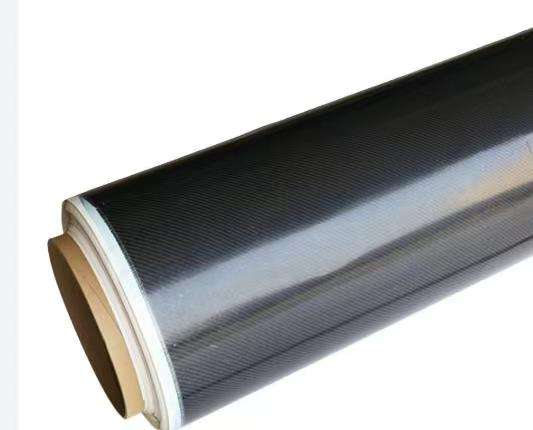
Diamond-Coated and Carbide Blades for Manual and Semi-Automatic Systems
For manual cutting tables and semi-automatic saws, blade material and edge design directly determine cut fidelity. Diamond-coated blades deliver exceptional wear resistance, maintaining sharpness over hundreds of linear meters, while generating clean, burr-free edges with minimal heat. They are ideal for high-volume sheet cutting where edge consistency matters. Carbide blades offer lower upfront cost but wear faster; once dulling begins, they pull fibers and initiate delamination. A fine-toothed carbide blade with triple-chip grind improves edge retention and reduces breakout, extending usable life. In all cases, rigid, low-vibration systems and optimal blade speed are essential for accuracy. Operators should replace blades at the first sign of dulling, as cut quality degrades rapidly after edge integrity is compromised. Regular calibration of clamping pressure and cutting path ensures repeatability across production runs.
Waterjet vs. Blue Laser – Kerf Precision, Heat-Affected Zone, and Edge Integrity
When mechanical tools struggle with delamination and wear, non-contact methods provide a path to clean, high-precision cuts in bidirectional carbon fiber. Waterjet and blue laser cutting eliminate mechanical stress, but their underlying physics produce distinct trade-offs in kerf geometry, thermal impact, and edge integrity. Waterjet cutting uses high-pressure water with abrasive particles to erode material, producing no heat-affected zone as it is a purely cold process, and delivers smooth edges with no thermal damage. However, it typically produces a wider kerf of 0.5 to 1.0 millimeters and may require post-cut cleaning of abrasive residue. It is suitable for thick laminates with no heat limitations and offers moderate speed that increases with thickness. Blue laser cutting uses a focused blue laser beam to vaporize resin and fibers, creating a minimal, localized heat-affected zone with resin degradation possible if parameters are suboptimal. It achieves a much finer kerf as narrow as 0.15 millimeters with precise beam control, delivering very clean edges with minimal fraying, though slight charring may occur if not optimized. It is best for thin to medium sheets, as excessive thickness risks heat buildup, and it excels at rapid, complex contours with high speed for thin materials. Waterjet cutting eliminates thermal stress entirely, producing delamination-free edges, but its wider kerf and residual abrasive contamination often necessitate post-processing. Blue laser systems leverage their shorter wavelength to achieve kerf widths down to 0.15 millimeters and confine the heat-affected zone to just a few microns when properly tuned, preserving the resin matrix without compromising fiber alignment. For thick structural components, waterjet's cold process remains the safer choice; for thin, intricate laminates requiring micron-level precision, blue laser's speed and fine kerf are decisive. The optimal method balances bidirectional carbon fiber's heat sensitivity against the required edge fidelity and dimensional accuracy.
Frequently Asked Questions
Why do standard cutting tools fail on bidirectional carbon fiber? Standard cutting tools degrade quickly due to carbon fiber's abrasiveness and dual-fiber orientation, leading to wear, delamination, and poor surface finishes.
How does CNC routing optimize cutting bidirectional carbon fiber? CNC routing uses high spindle speeds, precise feed rates, compression cutters, and diamond-coated tools to achieve clean, delamination-free cuts.
When should I choose waterjet cutting over blue laser cutting? Waterjet cutting is preferred for thick laminates due to its cold process and absence of thermal impact, while blue laser is ideal for thin to medium sheets requiring high precision and fine kerf widths.
What is the advantage of diamond-coated blades for manual cutting? Diamond-coated blades offer exceptional wear resistance, maintaining sharpness over extended use, and delivering clean, burr-free edges ideal for high-volume applications.
What factors influence cutting precision in bidirectional carbon fiber? Factors include tool geometry, material and coating, spindle speed, feed rate, dust extraction, and system calibration. These need optimization for clean cutting results.