
 EN
EN
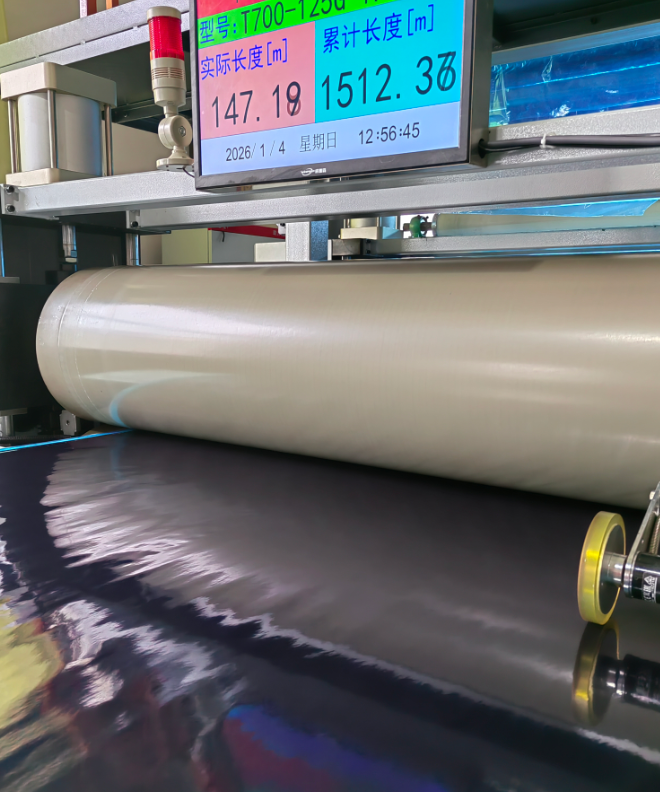
UD Prepreg Curing: Resin Kinetics, Thermal Control and Digital Process Optimization
Unidirectional (UD) prepreg composites are widely used in aerospace structural parts, high-speed equipment and high-precision industrial components. Unlike ordinary composite materials, UD prepreg’s final mechanical strength, thermal stability and low-defect performance completely depend on accurate curing control. Minor errors in thermal parameters or resin reaction timing will lead to voids, residual stress, insufficient crosslinking and component scrapping. This article systematically explains UD prepreg resin chemistry, thermal transition rules, autoclave/oven process differences, real-time monitoring methods and digital twin optimization strategies, providing standardized process guidance for high-quality UD composite manufacturing.
Resin Chemistry: How Epoxy, BMI and Cyanate Ester Shape Cure Behavior
The resin matrix is the core factor that determines UD prepreg curing window, reaction speed and process tolerance. Different resin systems have unique activation energy and reaction mechanisms, completely changing the thermal cycle design of production.
Epoxy resin is the most mainstream material for aerospace UD prepreg due to its flexible and adjustable kinetic performance. By adjusting hardener ratio, accelerator content and molecular backbone structure, manufacturers can freely control gel time, exothermic peak and room-temperature service life. Standard 180°C-grade epoxy prepreg retains 30–45 minutes of out-life at room temperature; fast-curing epoxy can complete full crosslinking within 10 minutes at 150°C, suitable for high-efficiency batch production.
Bismaleimide (BMI) resin targets high-temperature resistant scenarios. Its cured glass transition temperature (Tg) exceeds 250°C, but it requires multi-stage heating above 200°C. BMI’s polymerization reaction window is extremely narrow. Improper heating speed easily causes internal porosity or thermal runaway, requiring ultra-precise temperature ramp control.
Cyanate ester resin relies on cyclotrimerization reaction curing (150–200°C), featuring ultra-low dielectric loss, which is specially used for radar radome and high-frequency communication structural parts. However, it is extremely sensitive to moisture and catalyst dosage. The slow diffusion reaction requires longer holding time to ensure uniform curing of thick laminates.
Core Curing Principles: Gelation, Vitrification and Degree of Cure (α)
Three core indicators govern the final quality of UD prepreg curing: gelation, vitrification, and degree of cure. Mastering their conversion relationship is the key to eliminating under-curing and over-curing defects.
Gelation is an irreversible physical and chemical transition point. The resin changes from liquid flow state to elastic rubber network, and resin flow and fiber infiltration stop completely. For UD prepreg production, consolidation pressure must be applied before gelation. Delayed pressure application will lock volatile gas and dry spots inside the laminate, forming permanent void defects.
Vitrification refers to the state when the material’s real-time Tg rises to the curing temperature. At this stage, the reaction changes from chemical kinetic control to diffusion control, and the curing speed drops sharply. Thick UD components need segmented temperature rise to avoid premature vitrification of the surface layer, which causes incomplete curing of the core material.
Degree of cure (α) is a quantitative standard to evaluate crosslinking quality. Industrial verification shows that α>0.92 ensures qualified mechanical strength and thermal stability; α<0.85 will lead to decreased Tg, increased water absorption and reduced interlayer shear strength. Manufacturers use DSC differential scanning calorimetry to detect residual enthalpy, accurately calculate curing degree, and formulate standardized curing cycles.
Autoclave vs Oven Curing: Thermal Uniformity and Quality Gap
Heating equipment selection directly determines the through-thickness temperature uniformity, residual stress and void rate of UD prepreg laminates. Autoclave and ordinary oven have essential differences in heat transfer mode and pressure environment, resulting in obvious performance gaps in finished products.
|
Parameter
|
Autoclave Curing
|
Oven-Only Curing
|
|---|---|---|
|
Heat Transfer Mode
|
High-density forced convection
|
Low-speed convection + radiation heating
|
|
Working Pressure
|
3–7 bar pressurized environment
|
Only vacuum bag pressure (~1 bar)
|
|
Thermal Lag
|
Low, stable heating
|
Severe, hours of lag for thick parts
|
|
Edge-Core Temperature Difference
|
Less than 5°C
|
Up to 15°C during heating
|
|
Main Defect Risk
|
Local thermal runaway
|
Core under-cure & high void content
|
Autoclave’s high-pressure gas environment compresses volatile bubbles and eliminates internal voids. According to the 2023 CIR Compendium data, autoclave-cured UD laminates have 5–10% higher interlaminar shear strength than oven-cured parts, with more stable through-thickness curing consistency.
Real-Time Monitoring: Thermocouple Arrays and Dielectric Cure Sensors
Fixed curing recipes cannot adapt to thickness changes, environmental temperature fluctuations and resin batch differences. High-precision UD prepreg production relies on real-time dynamic monitoring.
Multi-point thermocouple layout (mold surface, part edge, laminate core) accurately captures the coldest lagging area, and the heating rate is adjusted according to the slowest reaction zone to avoid thermal runaway. Matching with in-situ dielectric sensors, the system can track resin viscosity changes, gelation time and real-time curing degree.
Aerospace production verification proves that closed-loop sensor feedback can shorten curing cycle time by 20% while maintaining α>0.95 overall curing uniformity. NASA 2021 industry report points out that without real-time monitoring, the temperature deviation of the mold surface can reach 30°C, resulting in 12% Tg inconsistency in a single component.
Digital Twin & Thermal Modeling: Predictive Curing Optimization
Traditional curing process relies on manual experience and repeated trial and error, with long cycle and high scrap rate. Modern UD prepreg manufacturing adopts thermal diffusion modeling and digital twin system to realize predictive intelligent curing.
The physical model calculates the heat conduction law of anisotropic UD fiber layers, integrating mold contact resistance, resin exothermic reaction and directional thermal conductivity parameters. Combined with real-time data of thermocouples and dielectric sensors, the digital twin dynamically predicts the temperature field and curing degree of the whole component.
Engineers can actively adjust heating rate and holding time before defects occur. This technology reduces process development cycle by 50% and effectively avoids under-curing and thermal runaway defects, realizing stable mass production of high-performance UD composites.
Shelf Life & OOA Process Control: RTD Thermal Dose Management
UD prepreg is extremely sensitive to ambient temperature. Uncontrolled storage and handling will cause resin pre-reaction and directly invalidate the curing process.
Standard industrial protocol requires long-term storage of UD prepreg at −18°C or lower, which can inhibit 99% of resin pre-curing reaction. The core monitoring index is Resin Thermal Dose (RTD), which accumulates all temperature-time exposure from freezer, cutting process to lamination.
Each resin system has a fixed activation threshold. Once the cumulative RTD exceeds the standard, the resin viscosity rises in advance, volatile gases precipitate, and fiber wetting is insufficient. This risk is more prominent in Out-of-Autoclave (OOA) processes without high-pressure protection. Strict RTD traceability, cold chain management and batch inspection are the key guarantees for consistent curing quality.
FAQ
What are the main resin systems for UD prepreg?
The three mainstream resins are epoxy, BMI and cyanate ester. Epoxy features flexible processability; BMI provides ultra-high Tg; cyanate ester offers low dielectric performance for high-frequency applications.
Why is gelation critical for UD prepreg quality?
Gelation is the cutoff point of resin flow and fiber wetting. Applying pressure before gelation eliminates voids and ensures dense lamination; delayed pressure will form permanent internal defects.
What is vitrification in composite curing?
Vitrification means the resin Tg rises to the curing temperature, slowing the reaction speed sharply. Segmented heating is required for thick UD parts to avoid incomplete core curing.
Which is better, autoclave or oven curing?
Autoclave curing has higher pressure and uniform heat transfer, lower void rate and 5–10% higher interlaminar strength, suitable for high-standard aerospace components. Oven curing is more cost-effective for general industrial parts.
How to ensure long-term stability of UD prepreg?
Strict −18°C cold storage and full-process RTD thermal dose tracking prevent resin pre-activation, ensuring stable curing performance before laying up.
Table of Contents
- Resin Chemistry: How Epoxy, BMI and Cyanate Ester Shape Cure Behavior
- Core Curing Principles: Gelation, Vitrification and Degree of Cure (α)
- Autoclave vs Oven Curing: Thermal Uniformity and Quality Gap
- Real-Time Monitoring: Thermocouple Arrays and Dielectric Cure Sensors
- Digital Twin & Thermal Modeling: Predictive Curing Optimization
- Shelf Life & OOA Process Control: RTD Thermal Dose Management
- FAQ