
 EN
EN
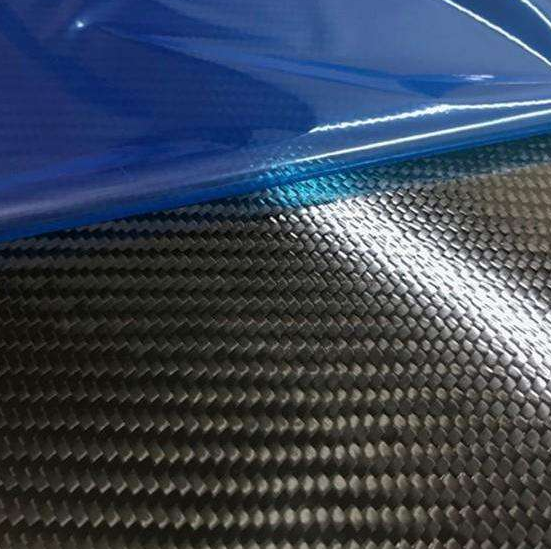
Carbon fiber reinforced polymer (CFRP) is the preferred high-performance material for aerospace, automotive, and industrial structural parts, thanks to its ultra-light weight and high strength. However, hidden internal defects, irregular fiber structure, unqualified mechanical properties and unstable resin composition will seriously affect structural safety. Professional and standardized carbon fiber testing is the core guarantee to ensure product stability, consistency and long service life.
Non-Destructive Testing: Ensure Internal Integrity of CFRP Laminates
Internal defects such as voids, delaminations and bonding disbonds are invisible during visual inspection but extremely harmful. According to Lloyd’s Register (2022), these hidden flaws can reduce the load-bearing capacity of carbon fiber components by up to 40%. Non-destructive testing (NDT) realizes full internal quality inspection without damaging finished products.
Ultrasonic Testing (UT)
Ultrasonic testing is the most mainstream and reliable NDT technology for CFRP internal detection. High-frequency sound waves penetrate carbon fiber materials and reflect at defective interfaces with changed density and elasticity, accurately locating voids, interlayer delaminations and disbonds.
Phased-array ultrasonic probes support high-resolution C-scan imaging for large panels, forming quantifiable and traceable quality records. Water-jet and immersion coupling ensure stable detection for complex special-shaped parts. After precise calibration, ultrasonic testing can accurately identify tiny planar defects of 6 mm, fully meeting strict aerospace and automotive quality standards. It effectively avoids on-site failure risks and extends the service life of carbon fiber components.
Infrared Thermography vs Eddy Current Testing (Complementary NDT Solutions)
Infrared thermography and eddy current testing are two complementary non-destructive testing technologies, targeting different CFRP defects.
Active infrared thermography adopts pulse heating and infrared thermal imaging analysis, realizing full-field non-contact detection. It can accurately find subsurface delaminations and disbonds as shallow as 0.5 mm under the surface, and is very suitable for large-area bonding quality inspection.
Eddy current testing uses the conductivity of carbon fiber to detect fiber misalignment, waviness and near-surface micro-cracks — the main causes of reduced compressive strength. Its disadvantage is that the detection sensitivity decreases rapidly with depth, so it cannot detect deep defects and requires precise distance control.
In actual production, matching the two methods achieves comprehensive internal quality assessment: thermography for bonding integrity, eddy current testing for fiber structural uniformity.
ASTM Standard Mechanical Performance Testing
NDT detects defects, while ASTM-standard mechanical testing verifies the true structural performance of carbon fiber materials. Standardized test procedures eliminate data errors caused by different equipment and processes, ensuring that strength, modulus and other indicators are unified and comparable. Destructive coupon test data is more authoritative than factory datasheets, supporting safety-critical product certification and mass production.
ASTM D3039: Tensile Strength & Modulus Testing
ASTM D3039 is the core standard for uniaxial tensile testing of carbon fiber laminates, widely used for primary load-bearing structures such as aircraft skins and spar caps.
Standard tabbed coupons are tested by a universal testing machine, with micro-strain deformation accurately collected by extensometers. The standardized process avoids fixture failure in advance, obtaining true fiber-dominated tensile performance with strength over 2500 MPa. Mass test data of 30–50 samples generates B-basis allowables, which calibrate finite element models and verify the in-plane tensile resistance of structural parts.
ASTM D7264: Flexural Performance Testing
Actual working conditions are often complex tension-compression-shear coupling states, which cannot be simulated by simple tensile tests. ASTM D7264 standardizes carbon fiber flexural testing through three-point and four-point bending fixtures.
It effectively captures hidden failure modes including surface fiber micro-buckling, interlaminar shear damage and matrix cracking. Four-point bending produces more accurate flexural modulus without shear interference; three-point bending is suitable for rapid strength verification. This test is essential for bending-resistant components such as floor beams and stiffened panels, preventing sudden brittle fracture under high strain loads.
Surface & Dimensional Manufacturing Quality Inspection
Surface appearance, machining precision and overall manufacturing consistency determine the assembly performance, aesthetics and durability of carbon fiber parts.
Under 10× magnification visual inspection, technicians check uniform fiber orientation, consistent resin flow, and eliminate dry spots, pinholes and foreign impurities. The surface clear coat is inspected for fading, orange peel and missing coverage to avoid moisture penetration and performance degradation during thermal cycling.
For dimensional precision, CMM coordinate measuring machines are used to verify trimming, drilling and edge finishing accuracy, ensuring hole position and size meet engineering tolerances. Post-machining inspection eliminates fiber burrs, micro-cracks and edge delaminations.
Modern manufacturers adopt AI real-time online monitoring during automated laying, actively identifying gaps, overlaps and wrinkles before curing. The whole-process closed-loop quality system ensures consistent finished product quality.
FTIR Spectroscopy: Resin Composition Verification & Batch Consistency
Resin chemistry directly determines the interlayer strength, weather resistance and fatigue durability of CFRP materials. FTIR (Fourier Transform Infrared) spectroscopy is a fast and non-destructive resin verification method.
By detecting characteristic molecular absorption peaks such as carbonyl groups and epoxy bonds, FTIR accurately distinguishes thermoset resins (epoxy, phenolic) and thermoplastic resins (PEEK). It effectively judges incomplete resin cross-linking and batch contamination, ensuring raw material formulas fully meet design standards. Stable resin composition guarantees consistent mechanical performance and long-term durability of mission-critical carbon fiber components.
FAQ
What is ultrasonic testing for carbon fiber?
Ultrasonic testing is a key NDT method that detects internal voids, delaminations and disbonds to ensure CFRP structural integrity.
Which is better: infrared thermography or eddy current testing?
Infrared thermography is ideal for large-area subsurface bonding defect detection; eddy current testing specializes in checking fiber misalignment and near-surface cracks. The two technologies complement each other.
Why is ASTM mechanical testing necessary?
ASTM standardized testing eliminates data deviation, verifies true tensile and flexural performance, and provides authoritative data for structural design and safety certification.
How to guarantee carbon fiber manufacturing quality?
Manufacturers adopt visual inspection, AI online monitoring, CMM dimensional calibration and post-processing defect detection to achieve full-process quality control.
What is the purpose of FTIR testing?
FTIR verifies resin chemical composition, distinguishes resin types, and ensures batch consistency, stabilizing the long-term mechanical performance of carbon fiber products.