
 EN
EN
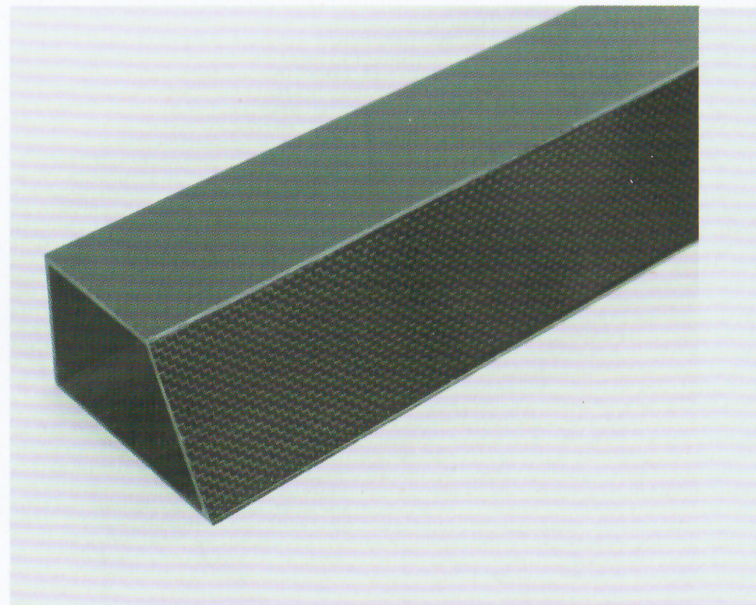
The Risky Aspects of Angled Cuts for Carbon Fiber Tubes
Carbon fiber tubes have an uneven structure. That makes slated cuts easier to delaminate and splinter. Beveled edges lead to differently distributed, sharp force, which leads to more fiber exposure. Beveled cuts have been shown to lead to structural integrity reduction on some scales. When blades slice down at acute angles, this leads to epoxy splintering worsened by an increase in cured epoxy potent. Prolonged contact will lead to weakened resin, worsened by high levels of friction heat. In the absence of supportive tooling or rigidity, blades at acute and oblique angles will cause complete collapse of the structure on the site of the objective.
The Best Carbon Fiber Tube Cuts on the Market
Cutting with an angled Carbon Fiber Tube tool allows for a certain degree of compensation to be taken for edges that have alternating serration. Better performance is measured by accuracy of the cuts, degree of the edges, and cost efficiency.
CNC tooling at the site of the cutter will dab a Live or air tight switch and then cut to a set value of ±0.1mm. That will be used as a baseline for adjustment. A band saw with a reverse gear and vacuum will allow for alternating teeth cuts at an acceptable cost to some degree. With an industrial laser, heat and mechanical propulsion will not cause the cuts to grab, in trade for a cool $15,000, and will require a water system to circulate the heat away. In the case of a prototype to some degree, a CNC tool at the site of the cut will be used in trade of +/-0.1mm of precision for the cost of $2,000-8,000.
Crucial Design Features For Jigs That Stabilize Carbon Fiber Tube During Bevel Cuts
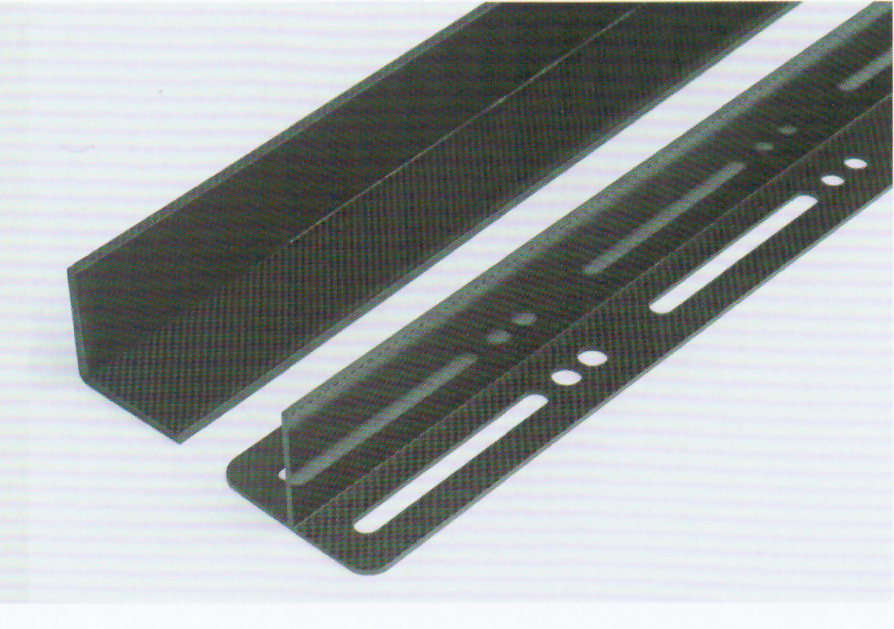
Innovative designs for jigs include:
Contoured V-Blocks: Curvature matched to within 0.5mm of tube to evenly distribute clamping forces.
Kinematic Mounting: Tube ends secure while still grant micro-adjustments for angular alignment.
Anti-Slip Surfaces: Robust rubberized coatings have a 70–90 Shore A hardness to reduce slippage.
Compared to freehand cuts, jigs that are designed as stated above, reduce delamination of carbon tubes by 47 percent. For angles over 30º, support mid-span to help attenuate harmonic resonance, and rotate tube in the opposite direction of the blade to reduce the fibers from lifting.
Settings of Blades, Bits, and Processes for the Best Carbon Tube Cuts
Carbide vs. Diamond Blades: Settings for 10 inch cuts.
Carbide blades are most suited for low volume jobs with a high blade tooth count. The recommended RPM and feed to optimize the use of the blade, while also controlling the amount of of fiber that is pulled out, is 2500 to 3000 RPM and a feed rate of 2 inches/min. The higher end of the recommended tooth count is 100 per 10 inches. Diamond blades counter the low volume with a high volume production trade, requiring a lower tooth count with the recommended tooth count being between 40 to 60 per 10 inches. Your trade off using diamond blades is a higher RPM of 3500 to 4000 and a feed rate of 5 inches/min, for comparable cut edges.
Always trap the tubes within a vibration isolating jig. The risk of delamination will increase by 60% with a higher RPM or feed rate, as it alters the matrix. Important note that over a 60% increase of risk is degredation of the matrix. Dust extraction must be maintained as carbon dust buildup will evolve the matrix and inhibit the cutting tool.
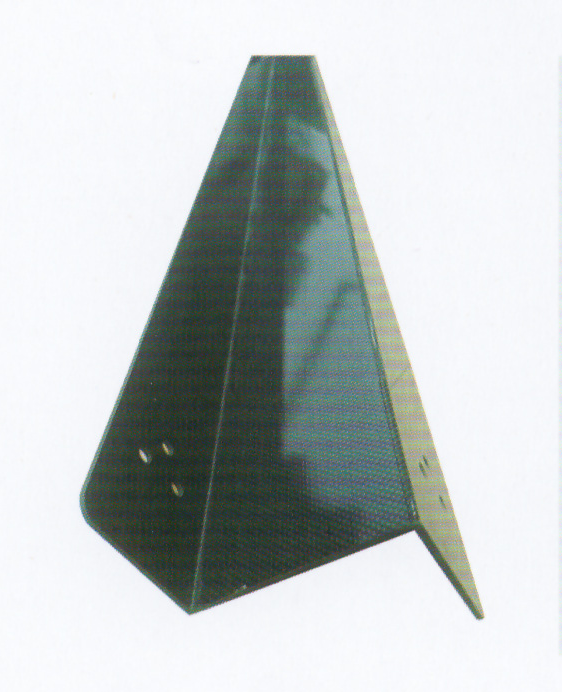
This guide details the method and precautions you must take when cutting angles in a carbon fiber tube. It will cover steps for handheld and bench-tool techniques.
Marking Cuts and Preventing Vibrational and Crush Damage
You can mark cut angles and get to within ±0.5° accuracy using a protractor and a template. Support the tube's length with non-slip V-blocks to avoid cracking. For clamping, use a non-marring clamp near the cutting zone with 15-20 psi, which is a reasonable pressure. Otherwise, with greater pressure, the layer of carbon fiber could separate. Soft clamp jaw liners help even the pressure for the clamp area and reduce the vibration. This also lessens harmonic vibrations down by 70% for cuts with no clamp support.
Controlled Rotation and Feed Directions
You can maintain a consistent clockwise rotation and optimal fiber alignment. Regarding tips for bevels, if you wish to have a bevel less than 30°, it is two to four inches per minute. It is one to two inches for steeper bevels. You should also pause every 45 seconds to clean out the carbon, which builds up and requires clearing lessens the splintering. With fixed blades, cut in repeated increments of no more than 10° to get a perceived bevel with less than 0.1mm variance for repeatability.
FAQs
What is the risk with cutting angles of carbon fiber tubes?
With angled cuts, the carbon fiber layers are more susceptible to delaminating and splintering. It is due to carbon fiber tubes having structures that are anisotropic. Uneven shear forces can cut microfractures that could result in a the tube's loss of structural integrity.
What are the best tools for angled cuts?
The best tools for angled cuts are a CNC, or a computer controlled router/band saw, and lasers. You also must have a specialized jig to ensure proper stability during the cuts.
How do I minimize delamination when cutting carbon fiber tubes?
Use the correct equipment, for example, CNC routers for accuracy or diamond blades for strength, and implement jig stabilization techniques to help with damage caused by vibrations.
What is the recommended feed rate for cutting carbon fiber tubes?
With carbide-tipped blades, the recommended feed rate is ≤2 inches/min, while diamond blades allow a faster rate of 3–5 inches/min for high volume production.