
 EN
EN
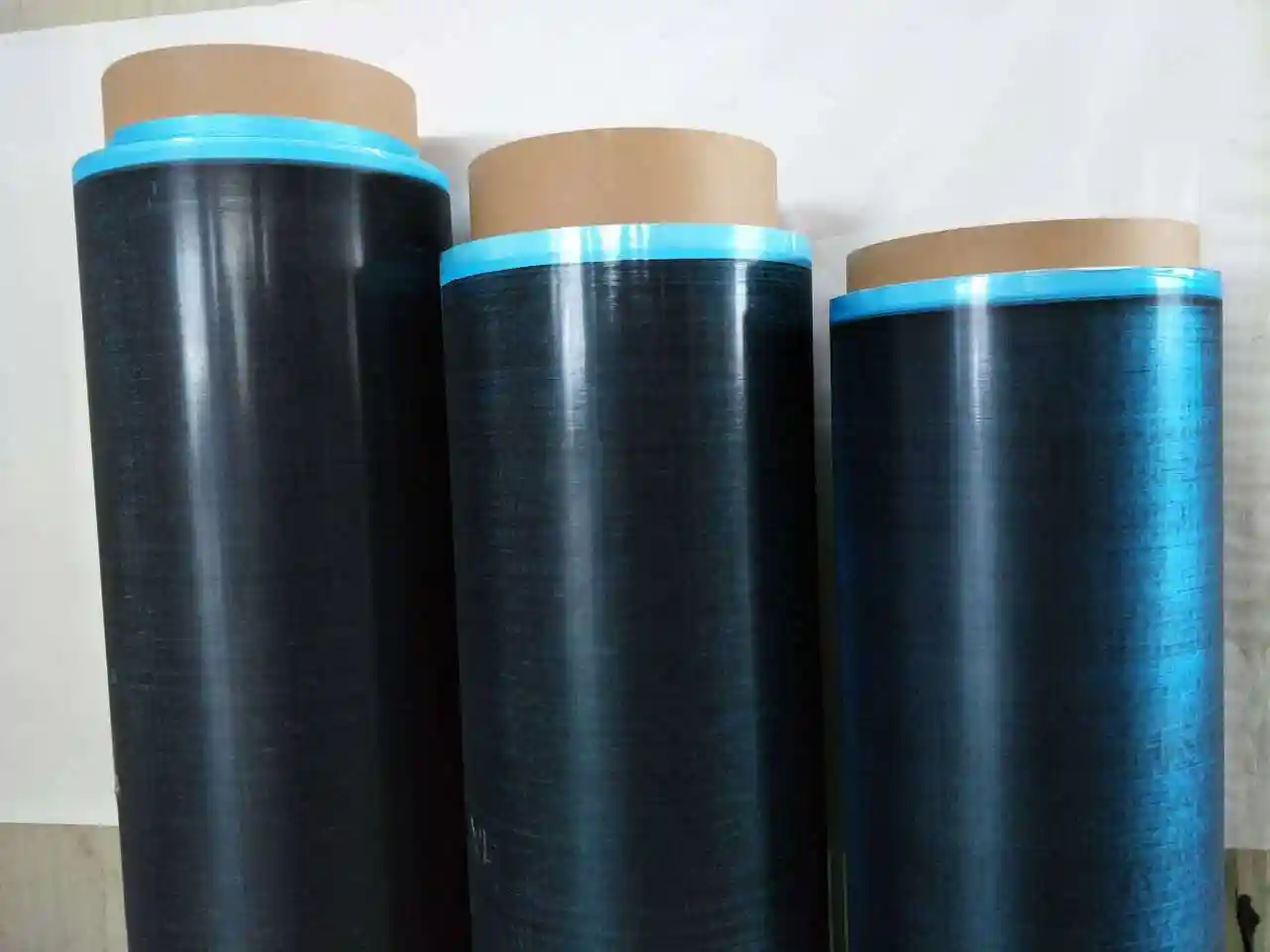
The Effectof Core Size, Material Width, Fabric Thickness, and Areal Density.
There are four main factors that affect the available length that can be used on carbon fiber rolls: core size, material width, fabric thickness, and areal density. The core size determines the inside diameter which sets the minimum length that can be available when unwinding. The width determines the amount of space available across from where we pulling the material. The fabric thickness impacts the number of layers that can fit into each winding. Most fabrics are between 0.1 and 0.5 mm thick with areal density indicating the pack density of the fibers, expressed in grams per square meter. When areal density is upwards, the manufacturer must be precise with the calculations because there can be issues of excess weight or poor performance. For example, consider two rolls of the same width with different areal densities. One roll may be about 200 g/m² while the other only 130 g/m². Therefore, the heavier roll has nearly 1.5 times the material per meter. Any of these measurements being imprecise can delay the project.
Based on data from Composites Manufacturing (2023), nearly three-quarters of composite projects are delayed due to a miscalculation of these elementary project parameters.
Core measurements such as diameter, width, thickness, and density play an essential role when calculating the possible length of rollable material.
These dimensions can alter the overall structure, leading to the following geometric relation:
Length = (Roll Outer Radius² − Core Inner Radius²) × Π × Material Width / (1000 × Thickness)
For example, smaller cores of diameter 76mm provide 15-22% less length than the 150mm core standard.
In terms of width, the thickness tolerance of a roll being 1,270mm and having a ± 2% tolerance means that a roll could exhibit a length difference of 25.4 mm per linear meter.
If thickness yield over a 300 meter roll has a deviation of 0.05 mm, that can result in 18% of yield being lost.
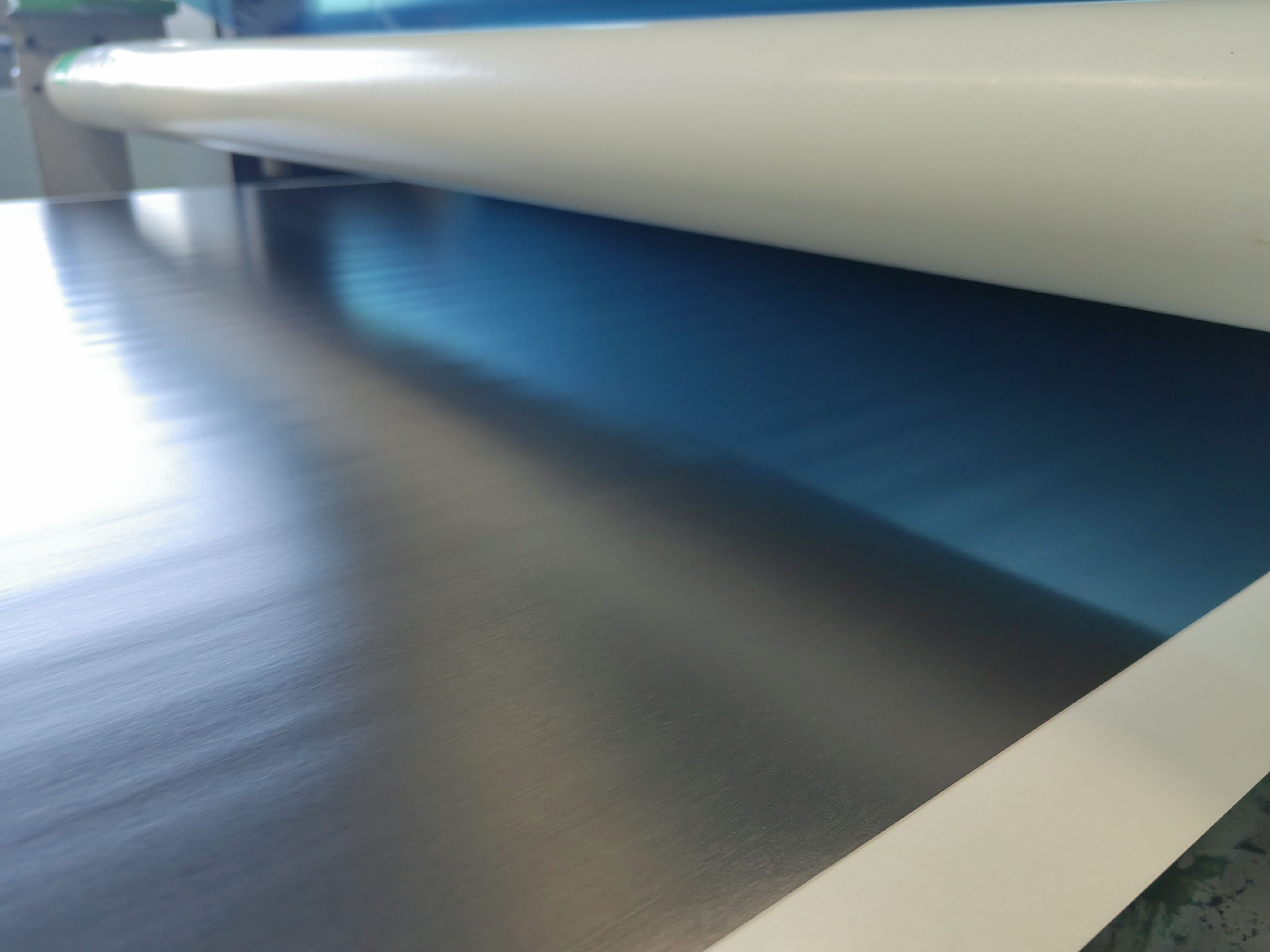
In terms of high-modulus carbon fiber fabrics that have an areal density of 190+ g/m², estimate length with a 5% density compensation.
“Roll Planning for Carbon Fiber: The Art and Science” [Top of the page]
In Manufacturer datasheet, look for core dimensions (ID/OD with treadle) and tolerance bands for thickness to be of a certain batch and not nominal, to comply with ASTM D3776 areal density, to be roll winding with linear tension of 25 N/cm as this will not loosen when the roll is being transported.
Expect standard products to have 7−12% difference between listed length and the actual usable length. It is also essential to select a supplier who has third party validated measurements as this has been demonstrated to decrease length estimate error by 83% when compared to standard deviation based on length specs (JEC Composites 2024).
It is also important to not have any paper padding as each protective layer will reduce the length by 0.3% per linear meter.
Exact Formula and Application for Carbon Fiber Roll Length
Deriving length from cross-sectional area: OD, ID, and material thickness
The math here actually ignores width when calculating volume, and that’s what gets it canceled out. What matters is how thick the material is. And this is why precision goes so high for thickness readings. A difference of plus or minus 0.01 mm can shift length calculations by 4% for rolls of regular size. When it comes to production runs, that's massive. Most industry standards suggest thickness checks using micrometers at three different locations across the width of the roll. This is designed to mitigate issues caused by the measuring tool, or those annoying edge-coupled thinning effects that occur within the processing materials.
Step-by-step calculation of a carbon fibre roll (0.25 mm thickness). Dimensions are: 300 mm OD, 76 mm ID, 50 mm wide.
This is assuming ideal windings with no tension loss. In practice, add a 12−18% buffer for overlaps, trimming, and cutting waste. In the case of this roll, it translates to a recommended planning length of 310−312 meters.Project-Specific Changes to the Estimation of Carbon Fiber Roll Lengths
Considering waste, overlap, tension loss, and layup inefficiency (12−18% average buffer)
The task of estimating the length of carbon fiber rolls is influenced by many factors, and is not solely determined by geometry.
Measurable variables associated with the project directly affect the quantity of fiber consumed and include the following:
Material waste due to cutting or trimming
Overlap used to meet structural joint or continuity requirements
Lengthening of fibers due to handling induced tension
Layup deposition or manual process inefficiencies
In the end, we can estimate that up to 12 to 18 percent of the fiber received in a project is potentially wasted, or used in practice, more than any theoretical estimate. The industry is highly regulated, and aerospace engineering is a great example. Many companies will consider the additional buffer incorporated into the estimate as a waste of time and money, and this will frequently result in costly shutdowns and delays. The structural integrity of the components will also suffer, and regulatory compliance issues will arise. The experience of the last large industry study conducted last year made it clear that this situation is not solvable by the use of just lean manufacturing methods. Planned compensation is a completely indispensable requirement if it is desired to remain integrated in a controlled way in the financial and operational flow while avoiding waste.The Benefits of Digital Applications for a Carbon Fiber Roll Calculation
Digitized solutions are no longer a thing of the future; rather, they are a reality that simplifies roll length calculations, which were formerly complex, tedious, time-consuming, and labor-intensive. These solutions include mobile applications and web calculators. These applications and calculators take the core diameter, core width, core thickness, and core material density, and instantly provide the user with the length of a roll. Where calculations were once performed by a user and errors were possible, today, calculators and applications provide solutions with instantaneous feedback. Additionally, they automate the calculations of any overlap, tension loss, or waste buffer, which typically ranges from 12 to 18%. In digital solutions, information is not just saved with the user, but the user can also edit the core's inner and outer diameter and the core's material thickness—and the information is saved to the cloud. This simplifies history tracking, collaboration with team members, and simplifies digital solution usage. As a demonstration of the efficiency achieved by digital solutions, industry studies show that the use of digital solutions as opposed to spreadsheets results in a time savings of 70% or more. In addition, using digital solutions results in a more accurate material order and a more efficient use of the materials ordered, with less material not used. Closing the Loop.
Let's address some common questions (FAQ).
What things impact how long fiber rolls will be usable?
Inefficiencies in unwinding a roll can be caused by core size, material width, and the thickness and density of the fabric.
What is the formula for finding the length of a roll of carbon fiber?
The length is calculated with the formula (mathrm{Length} = frac{\pi (OD^{2} - ID^{2})}{4t}), where OD = outer diameter, ID = inner diameter, and t = thickness of material.
What is the impact of a buffer when estimating a roll of carbon fiber?
Most components of a roll's construction create waste through overlap, tension loss, etc., so an extra 12- 18% should be factored in.
What is the role of digital tools when estimating lengths of rolls of carbon fiber?
Greater accuracy and speed are the by-products of much of the waste and dimensional adjustments being preprogrammed in digital tools.