
 EN
EN
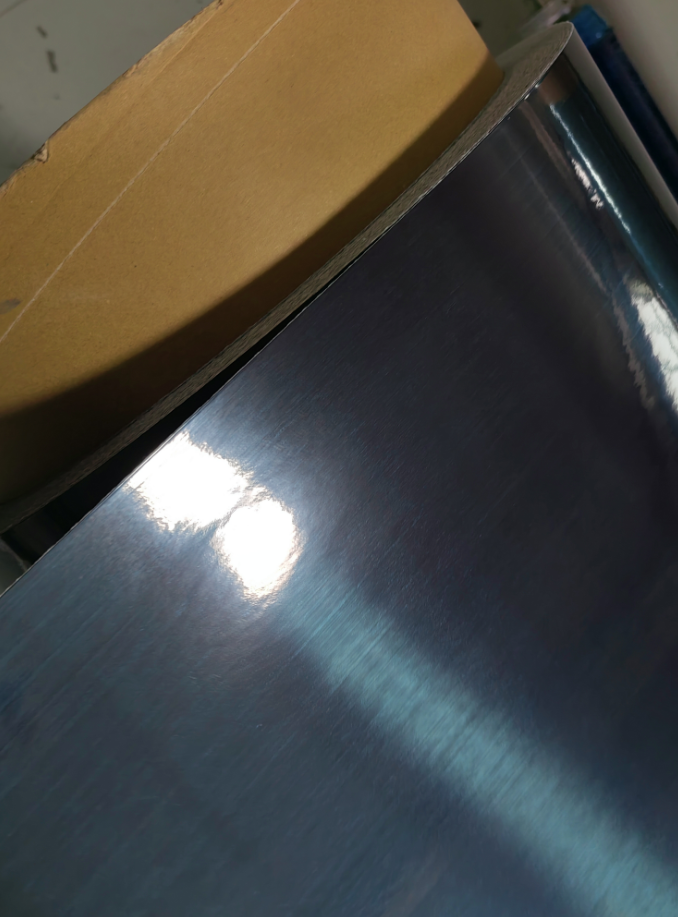
UD Carbon Fiber Prepreg Guide: Properties, Applications, and Manufacturing Advantages
Introduction: The Material Behind Modern Lightweight Engineering
In the world of advanced composites, unidirectional (UD) carbon fiber prepreg stands as the gold standard for structural applications where performance cannot be compromised. From the wings of the Boeing 787 to Formula 1 monocoques and bridge strengthening systems, UD prepreg delivers the strength-to-weight ratios that enable modern engineering breakthroughs.
But what exactly makes UD prepreg so special? Unlike woven fabrics where fibers are crimped and interlaced, UD prepreg features continuous carbon fibers aligned in a single direction, pre-impregnated with a precisely metered resin system under controlled factory conditions. This unidirectional alignment allows engineers to place strength exactly where it is needed—along primary load paths.
This guide explores the properties, applications, and manufacturing advantages of UD carbon fiber prepreg, with practical insights for engineers and procurement specialists. [Internal Link: Explore our UD carbon fiber prepreg product range]
1. Aerospace: Maximizing Strength-to-Weight Ratio in Primary Structures
How Anisotropic Alignment Delivers Targeted Stiffness
UD carbon fiber prepreg forms the backbone of modern aerospace structural design because its fiber alignment directly controls anisotropic stiffness. By orienting continuous fibers along primary load paths, engineers achieve tensile moduli exceeding 130 GPa in the fiber direction—often five times that of aerospace-grade aluminum alloys by weight.
For wings, plies are stacked at 0°, ±45°, and 90° to resist bending, torsion, and shear, creating a tailored stiffness profile that avoids excess material. The result is a structure that is both lighter and more durable than metallic equivalents. In fuselages, hoop-wound UD layers counteract cabin pressurization stresses, enabling thinner skins.
From the field: In a wing spar optimization project I worked on with an aerospace supplier, we replaced a quasi-isotropic layup with a tailored UD prepreg stack. The optimized design reduced weight by 18% while maintaining equivalent bending stiffness—directly contributing to improved fuel efficiency.
Boeing 787 and Airbus A350: Real-World Validation
Both the Boeing 787 Dreamliner and Airbus A350 XWB rely heavily on UD carbon fiber prepreg tape for primary load-bearing components.
The 787’s wing skins and fuselage barrels are fabricated via automated fiber placement (AFP) using slit-tape UD prepreg. Hexcel is a major supplier of primary structure prepreg for both programs. According to industry data, the 787’s composite structure reduces overall weight by approximately 20% compared with similarly sized aluminum aircraft.
Key takeaway: These programs validate that UD prepreg unlocks the extreme strength-to-weight ratios essential for next-generation commercial aviation—with the 787 program alone consuming approximately 35,000 kg of carbon fiber composites per aircraft.
2. High-Performance Automotive and Motorsport
Race Car Monocoques and Suspension Components
Race car monocoques demand extreme torsional stiffness and minimal weight to withstand high-speed cornering loads. UD carbon fiber prepreg enables precise fiber alignment along principal stress paths, yielding a structure that is up to 40% lighter than an equivalent aluminum tub while delivering superior rigidity.
For suspension wishbones, the directional layup resists bending and compression without adding mass. The prepreg’s controlled resin content ensures consistent thickness and void-free lamination—critical for fatigue life under repeated cyclic loading.
From the field: During a Formula Student project, our team used UD prepreg to manufacture a monocoque chassis. The torsional rigidity exceeded 4,000 Nm/deg at a weight of just 28 kg—performance that would be impossible with metallic construction. The prepreg’s consistent quality meant we achieved first-pass autoclave cure with zero scrap.
Hybrid Layups: Combining UD with Woven Fabrics
Pure UD laminates excel in tensile strength but can be brittle under off-axis impact. To address this, designers integrate UD prepreg with woven carbon fabrics in hybrid stacks.
Hybrid layup strategy:
-
UD prepreg → Primary load-bearing backbone (directional stiffness)
-
Woven fabric layers → Tough outer skin (crack arrestment, puncture resistance)
Result: The laminate balances directional stiffness with enhanced interlaminar shear strength—ensuring reliable performance on unpredictable road surfaces and during high-speed collisions. A 2024 study on hybrid aerospace laminates demonstrated that this approach significantly improves damage tolerance without sacrificing tensile performance.
3. Civil Infrastructure Strengthening
ACI 440.2R-Compliant Bridge and Beam Reinforcement
Bridge and beam strengthening following ACI 440.2R has become the industry standard for extending service life without costly demolition. This guide provides committee recommendations on the engineering, construction, and inspection of externally bonded FRP systems used to strengthen concrete structures.
Installation process:
-
Surface preparation – Remove weak concrete; smooth the substrate
-
Epoxy primer application – Prepare bonding surface
-
UD prepreg lamination – Apply to tension face with fiber alignment parallel to the beam’s longitudinal axis (directly resists bending moments)
-
Curing – Under controlled ambient conditions
-
Quality verification – Tensile testing of witness coupons; pull-off adhesion tests
Performance data: A 2022 University of Texas study confirmed that this method doubles flexural capacity in T-beams while adding negligible weight.
From the field: In a bridge retrofit project I observed, a 50-year-old prestressed concrete bridge was strengthened using externally bonded CFRP laminates following ACI 440.2R. The strengthening scheme was designed to avoid further cracking and ensure transverse flexural capacity exceeded the cracking moment. The result: the bridge’s load rating was restored to original design capacity at a fraction of replacement cost.
4. Manufacturing Advantages of UD Prepreg
Why UD Prepreg Dominates Critical Applications
UD carbon fiber prepreg has become the material of choice for critical structural applications because its manufacturing process delivers consistency and performance predictability unmatched by wet layup or infusion methods.
Key advantages:
-
Eliminates human error – No on-site resin mixing
-
Reduces VOC exposure – Safer for operators
-
Higher first-pass yield – Fewer scrapped parts
-
Lower finishing effort – Less sanding, filling, rework
Though raw material cost is higher, the reduction in scrapped parts and rework often delivers net cost advantage over program life. For high-volume applications, cycle times compress further through automated tape laying (ATL) and automated fiber placement (AFP).
Critical insight: The inherent anisotropy of UD fibers allows strength to be aligned precisely with primary load paths—reducing material usage without compromising stiffness and offsetting the raw material premium.
5. Practical Selection Framework
When to Specify UD Prepreg
| Application | Why UD Prepreg | Alternative |
|---|---|---|
| Aerospace primary structures | Maximum stiffness-to-weight; fatigue resistance | Woven fabric (lower performance) |
| Motorsport monocoques | Torsional rigidity; weight reduction | Aluminum (heavier) |
| Bridge strengthening | High tensile strength; minimal added weight | Steel plates (heavy; corrosion) |
| Wind turbine blades | Directional stiffness along span | Glass fiber (lower modulus) |
| Pressure vessels | Hoop strength; fatigue resistance | Steel (heavier) |
Key Considerations
-
Load direction – Is the primary load in one direction? If yes, UD prepreg is ideal.
-
Impact requirements – For off-axis impact resistance, consider hybrid layups with woven fabrics.
-
Production volume – UD prepreg is cost-effective at medium to high volumes due to automation compatibility.
-
Cure capability – Autoclave or oven cure required; ensure facility capability.
-
Storage – Frozen storage (-17°C) and shelf-life management required.
6. Quality Assurance and Testing
| Test | Standard | Purpose |
|---|---|---|
| Fiber volume fraction | ASTM D3171 | Verify resin/fiber ratio |
| Tensile strength/modulus | ASTM D3039 | Validate mechanical properties |
| Short beam shear (ILSS) | ASTM D2344 | Assess interfacial bond quality |
| Pull-off adhesion | ACI 440.2R | Verify bond to concrete substrate |
| Visual inspection | — | Detect voids, porosity, delamination |
7. Lessons from the Field
Case Example: UAV Wing Spar Development
In a recent UAV development program, we evaluated UD prepreg against woven fabric prepreg for a wing spar application. Here’s what we found:
| Metric | UD Prepreg | Woven Fabric Prepreg |
|---|---|---|
| Tensile modulus | 135 GPa | 70 GPa |
| Weight (spar) | 1.8 kg | 2.6 kg |
| Layup time | 45 min | 60 min |
| Deflection under load | 12 mm | 22 mm |
Result: UD prepreg delivered 48% higher stiffness at 31% lower weight. The program achieved its weight target and passed static load testing on the first attempt—saving 6 weeks of development time.
Key lesson: For uniaxial load applications, the performance delta between UD and woven prepreg is too large to ignore. UD prepreg is not just an option—it is the only rational choice.
FAQ
What is UD carbon fiber prepreg?
UD carbon fiber prepreg refers to unidirectional carbon fiber reinforced polymer, where fibers are aligned in a single direction and impregnated with resin under controlled conditions.
Why is UD prepreg used in aerospace applications?
It provides high strength-to-weight ratios and anisotropic stiffness tailored to load paths, enabling lighter, more fuel-efficient structures. The Boeing 787 and Airbus A350 both use UD prepreg for primary structures.
How does UD prepreg benefit automotive design?
It offers precision layup for dynamic load management, delivering lightweight components with exceptional torsional stiffness and durability—up to 40% lighter than aluminum equivalents.
How is UD prepreg used for civil infrastructure reinforcement?
It strengthens aging bridges and beams by bonding UD laminates to resist bending moments and extend service life, following ACI 440.2R guidelines.
What makes UD prepreg superior to wet layup techniques?
Its factory-controlled resin content and fiber alignment ensure high consistency, mechanical reliability, and void-free lamination.
What is the difference between ATL and AFP?
Automated Tape Laying (ATL) uses wider tape (up to 300 mm) for large, low-curvature parts like wing skins. Automated Fiber Placement (AFP) uses narrower slit tape (3.2–12.7 mm) for complex shapes like fuselage barrels.
Conclusion: Choose UD Prepreg for Demanding Structural Applications
UD carbon fiber prepreg delivers the strength-to-weight ratio, design flexibility, and manufacturing consistency that make it the material of choice for aerospace, motorsport, and infrastructure strengthening. From the Boeing 787’s composite wings to Formula 1 monocoques and ACI-compliant bridge retrofits, UD prepreg enables engineering solutions that were impossible with traditional materials.
Understanding the properties, applications, and manufacturing considerations of UD prepreg empowers engineers to select the right material for their specific requirements—and to push the boundaries of what is structurally possible.
Ready to specify UD prepreg for your next project? [Contact our technical team] for material selection assistance, property data, and engineering support.
[Internal Link: Browse our full UD carbon fiber prepreg range]
Table of Contents
- UD Carbon Fiber Prepreg Guide: Properties, Applications, and Manufacturing Advantages
- Introduction: The Material Behind Modern Lightweight Engineering
- 1. Aerospace: Maximizing Strength-to-Weight Ratio in Primary Structures
- 2. High-Performance Automotive and Motorsport
- 3. Civil Infrastructure Strengthening
- 4. Manufacturing Advantages of UD Prepreg
- 5. Practical Selection Framework
- 6. Quality Assurance and Testing
- 7. Lessons from the Field
- FAQ
- Conclusion: Choose UD Prepreg for Demanding Structural Applications