
 EN
EN
T700 Carbon Fiber Basics: Tensile Strength Standards and Variability
Value of 4,900 MPa and ASTM D4018/ISO 10618 compliance
T700 carbon fiber reports a tensile strength value of 4,900 MPa and is compliant to strain-rate tests in line with ISO 10618 and ASTM D4018. Ultimate tensile tests, which are strain-rate independent, and therefore, reproducible, are conducted with a displacement of less than 0.5%/min. To verify tensile strength, a type of statistical sampling is needed, which obtains a coefficient of variation that is less than 8%. This is a good indicator of fiber consistency. This baseline strength is important for pressure vessels in the aerospace sector. These structures also need to be predictable to ensure safety.
Real world examples and limitations: Weibull statistics, fiber flaw distribution, and limitations of bundle stress transfer
Three limitations explain why T700 composites are not rated at full tensile strength of 4,900 MPa. First, the larger volume of stressed regions contains more micro-cracks, which are potential fracture surfaces, and are a result of Weibull statistics. Second, the random distribution of these cracks results in weak regions in the bulk, which induces premature failure. Third, due to interfacial shear, uneven stress distribution in fiber bundles occurs and prevents efficient stress transfer beyond 85% of the ultimate load which results in uneven load distribution. This is the gap that is seen in composite behavior and fiber performance, and, therefore, the majority of industrial laminates achieve a tensile strength of 3,300–3,900 MPa.
Optimizing the T700 Carbon Fiber’s Tensile Performance through Advanced Precision Manufacturing
Using filament alignment and zero-twist tow handling techniques to keep the fiber's strength
In order to maintain the strength within T700, it is critical to keep the orientation of the filaments. The alignment of the filaments is critical as any alignment greater than 3 degrees introduces parasitic shear stresses and result in the degradation of the composite’s tensile strength by more than 30%. Zero-twist tow handling prevents the formation of micro-fractures during the handling, especially during the spooling and the lay-up operations, and is more important as the presence of surface flaws greater than 1.5 µm will result in the reduction of the strength of an individual fiber by 40%, according to the result of the study on the fracture mechanics. The modern automated optical alignment systems can achieve less than 0.5o, and this significantly reduces the concentration of the stress at the fiber-resin interface, and allows the tensile strength to reach the target nominal value of 4,900 MPa.
The accuracy of the prepreg lay-up and the controlling of the vacuum and autoclave pressures allows for the achievement of less than 0.5 percent void content.
Void content is still the main defect in manufacturing that limits tensile strength. When voids achieve over 1 percent volume, the strength of the laminate is reduced by 25 percent due to the amplification of stress at the boundary of the void. To achieve less than 0.5 percent void content requires tight process control that includes robotic lay-up that achieves less than 0.1 mm of positional accuracy, multi-step vacuum protocols to evacuate entrapped air, and autoclaving pressure that is tailored to the viscosity of the resin, which is usually 80 to 100 psi for the aerospace grade epoxies. A 2023 study by the Society for the Advancement of Material and Process Engineering (SAMPE) showed that the use of pressure-controlled ramping during curing resulted in a 63 percent reduction of void content, and a
Resin-Interface Optimization to Harness T700 Carbon Fiber Full Strength
T700 carbon fiber reinforced composites are the most widely used carbon fiber composites. However, they have multiple limitations. Optimizing resin will ensure we harness T700 carbon fiber composites to their full strength.
Cured resins must absorb less than 2% moisture to retain their bond integrity. The solution to mitigate transverse cracking is core shell rubber particles. These acts of micro cracking will leave the matrix intact and absorb tensile loads, maintaining the integrity of the bond. Interfacial tensile strength is tested with resin moduli. The optimal modulus of resin is 3-4 GPa, comparable to that of T700 carbon fibers, to help efficiently draw loads and prevent matrix failure. The fibers will be able to transfer the loads to the matrix resin more efficiently if the modulus of the matrix resin is comparable to that of T700 carbon fibers. Cured resin must use toughener interfacial modifiers to ensure adhesion to the fibers.
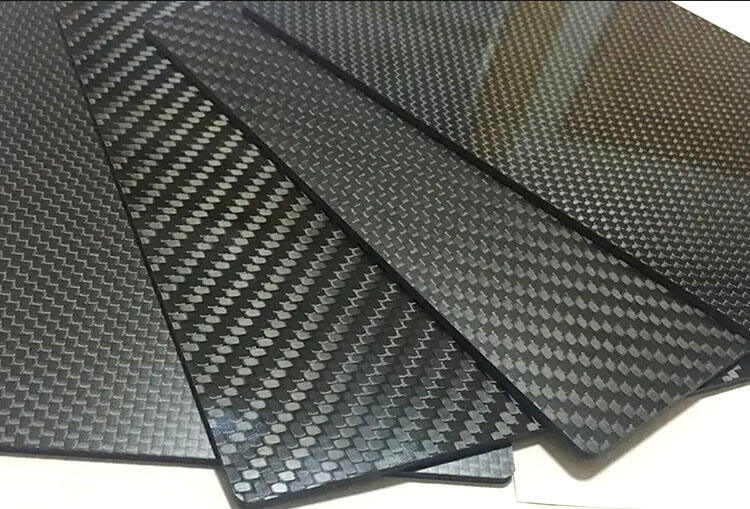
T700S fibers have elongation at break of 1.7%. T700G elongation at break is 1.5%. The difference of 0.2% is significant for micro cracking and interfacial durability. To optimize the interfacial shear strength, matrix resin for T700G must be highly flexible and cross linked. T700S also requires tougheners for interfacial adhesion.
Verification and Process Control: Ensuring the Realization of T700 Carbon Fiber Consistency
Meeting the required level of reliability and tensile performance for T700 composites is enabled by multi-tiered verification measures. T700 is manufactured with the aim of developing environmental inconsistency-related defects with the on-line surveillance and control of temperature, humidity, and pressure. Internal consistency is assessed with damage-free testing of components. Process capability is evaluated by using statistical control charts and Weibull-distributed strength data. This approach maintains the level of defects for every batch at 0.3% or lower. The precision of tow alignment is integrated with automated composition systems. Additionally, resin and structural integrity serve real-time analytics and control systems. This approach is targeted at realizing the tensile strength of 4,900 MPa for T700 composites in response to the needs of the aerospace and high-performance automotive industries. Quality assurance is complete with the documentation of the finished product and the certification of the raw material placement.
FAQ
What is the nominal tensile strength of T700 carbon fiber?
Nominal tensile strength for T700 carbon fiber is established at 4,900 MPa. This is supported by testing as per ASTM D4018 and ISO 10618.
What are the main reasons why the actual strength of the composite is lower than T700’s nominal tensile strength?
The main reasons for the actual strength of the composite being lower are the limited stress transfer mechanisms, along with load sharing inefficiencies and fiber flaws.
What is the impact of fiber alignment and lack of alignment?
The impact of fiber alignment is highly significant, as composite tensile performance is reduced by up to 30% due to a deviation of 3 degrees.
What manufacturing processes help reduce void content in composites?
To achieve increased strength and durability, robotic lay-up, stepped vacuum, and controlled autoclave pressure gradients are processes that help achieve < 0.5% void content.
What are the differences between T700S and T700G fibers?
T700S fibers exhibit a greater elongation at break (1.7% vs. 1.5% for T700G). This results in improved interfacial durability and an extended fatigue life under cyclic loading.